18 Mart 2012 Pazar


Ses ve Öfke


Ses Ve Öfke” pek çok eleştirmen tarafından beğenilen, Nobel Edebiyat Ödülü sahibi yazar William Faulkner’ın dört bölümden oluşan romanıdır. Olay örgüsünün alt-üst olduğu ilk bölüm, zihinsel engelli olan Benjy’nin ağzından anlatılmıştır. Bu bölüm, zaman ve mekan karmaşıklığını barındırmakta ve dolayısıyla okuyucuyu bir hayli yormaktadır.


Romanda olay örgüsünün karışık olması, yazarın “bilinç akışı” tekniğini kullanmış olmasıdır. Yazar bu teknikte, karakterlerin düşüncelerini olaylara ve oluş sırasına dikkat etmeksizin aktarmıştır. Bu teknik kendisini ilk bölümde daha çok belli eder. Çünkü Benjy, bilincindekileri zamanla geçmişten geleceğe atlatıp, geçmişteki olayları şimdiki zaman dilinde anlatmıştır. Yazar, romanın okunmasını ve anlaşılmasını kolaylaştırmak amacıyla farklı zaman dilimlerinin, renkli bir mürekkeple basılması önerisinde bulunduysa da bunun masraflı olduğu öngörülerek teklifi reddedilmiş, yerine zaman değişimini belirmek için bazı cümleler italik yazılmıştır.


Bunu daha somut hale getirip, bir örnekle açıklamamız gerekirse


....

“Pis aptal” dedi. “Canın dayak istiyor galiba.”

“Zor döversin.”

Kaç kere dövdüm. Kes sesini be.” Dedi Luster. “Oraya gitmek yok demedim mi sana? Toplardan biri kafana gelirse anlarsın. Hadi yürü bakalım.” İtti beni. “Otur” dedi. Oturdum, ayakkabılarımı çıkardı, pantolonumu kıvırdı. “Hadi gir suya da oyna. Belki geçer vızıltın.”

….


Bu alıntıda (sf.19) altı çizili cümlenin bir benzerini sayfa 15’te italik bir şekilde yazılmış şekilde, faytonda geçen konuşmaların arasında görüyoruz. :


Neden o yana gitmek istiyorsun?. Toplardan biri kafana çarpsın diye mi?...


Fakat bu italik yazılara rağmen hikayenin okunması ve anlaşılmasının bir hayli zor olduğunu belirmekte fayda var.


Diğer romanlarda kullanılan ve artık alışılagelen teknik ve yöntemler, Ses Ve Öfke’nin farklılığını ortaya çıkarmıştır. Aslında eser, bir romanın evrim sürecinde olduğu gibi giriş, gelişme, sonuç öğelerinden oluşturulabilir, daha anlaşılır kılınabilirdi. Okur, anlamsız bir takım parçalardan, anlamlı bir bütün oluşturamadığında kitabı yarıda bırakabilirdi. Bu yüzden yazarın, okurun sabrı noktasında risk aldığını düşünüyorum.


Bir diğer önemli nokta ise eserin dört bölümde de farklı kişilerin ağzından aktarılmasıdır. Özellikle ilk bölümün zihinsel engelli olan Benjy’nin ağzından anlatılmış olması, onun engeli ile duygularını, düşüncelerini ve olayları yansıtması, ilk aşamada büyük bir sıkıntı yaratmıştır. Halbuki tek bir anlatıcı ile iş daha basite indirgenebilir, akılıcılık bu şekilde sağlanabilirdi.

Diğer bir kolaylık ise kitabın arka yazısından sağlanabilirdi aslında daha iyi bir şekilde sağlanabilirdi demek daha doğru olur. Kitabın arka kısmında verilen bilgiler başlangıç için yeterlidir fakat bu da sınırlıdır.

Hidrofil Pamuk

His Shoes


While there is a lot to do,

I prefer not to do.

If there is a shortcut you don’t know,

Be sure that you’ll be taught soon.


Make your own path

And try to fix it to better.

Put some light on it

To avoid being a slave to fake kings.


When the sun is away home,

Love it to death.

Since death makes it worthy.

Life is yummy with its end,

End is shiny with its start.


Will you prefer not to do, too?

I most notably want to insist on the regret he would feel and what he would say to us. He did not regret anything indeed yet I put myself in his shoes and reflected what I felt from his point of view. Bartleby seems to feel imprisoned in his life, and it is significant that he eventually dies in prison. He is trapped by his job as scrivener, which is one of the most triggering reasons of his indifference, and the emerging capitalist economy so much that maybe he is either unable or unwilling to explain the reason for his discontent. Perhaps Bartleby’s ability to think independently has been so damaged that he cannot even find the words to express his own desires. Through Bartleby, Melville seems to question the nature of human freedom. He not coincidentally, assures what Henry David Thoreau advocated in Civil Disobedience. According to him people must defend their rights but in a right way without guns or wars. Civil means “adhering to the norms of polite social intercourse” which indicates something like polite and orderly disobedience-unarmed- and Bartleby’s manner of conduct is a great example of the disobedience though he did not win literally.

Hidrofil Pamuk


Benim Babam Toyota Gibi Adam


Bu reklamın bize bağıra bağıra söylediği tek şey var: Sen araban kadarsın, seni sahip oldukların tanımlıyor, hatta kişiliğini yansıtıyor. 1950’lerden bu yana değişen tek şey pazarlanan ürünler, mantık ise aynı. Mutluluğun, karakterin nereye ve neye ait olduğun kullandığın sigaraya veya tercih ettiğin ayakkabıya bağlı. “Sahip oldukların sonunda sana sahip oluyor.” Dövüş Kulübü klişelerinden bu söz, bu durumun özeti niteliğindedir.

Bu Toyoto reklamında özellikle değinmek istediğim nokta evvela çocukların “kullanılması” ve de çocuklar arasında geçen konuşmalardır. Aslında ateş olmayan yerden duman çıkmaz denilebilir buradaki tablo için; burada sergilenen durum bu reklamla oluşturulmuş bir manzara değil. Zaten bu çocukların yaşadıkları bizim günlük hayatımızda tıpkısını tecrübe ettiğimiz olaylardan sadece birisi. Kendi adıma konuşmak gerekirse öznesinin “ben” olduğu hatıralarım da yok değil. (Hem de) Lisedeyken babamım ortaklarından ayrılıp kendi işini kurmasıyla bazı fedakârlıklarda bulunmamız gerekiyordu; babamın o çok sevdiği arabası bunların başında geliyordu elbette ve ergen bir kolej öğrencisi olarak babama arabasını bir alt sokağa park etmesini tembihlediğimi hatırlatmaya yetti bu reklam. Buna benzer bir durumu da ortaokul mezuniyet balosunda yaşamıştı arkadaşım. Babasına bizi yarım saat geç bıraktırmıştı bahanesi ise hazırdı: assolistler en son gelir! Hâlbuki gerçek babasının Nemrut’a bile beraber çıktığı için satmaya kıyamadığı kırmızı Serçe-siydi.

Demek istediğim Toyota’nın reklamı bir çığır açmıyor daha kötüsü olan yanlışı körükleyip bunu normal gösteriyor. Evet diğer reklamların yapmaya çalıştığı ve yaptıkları da Toyota’nınkinden pek farklı değil fakat buradaki durum çocuklarla alakalı; ileride nasıl bireyle dönüşecekleriyle. Güya çocukların zekâsını öne çıkarıyor ve resmen çocuklar üstünden espriyle karışık ayıbını arka plana atıyor.

Dikkatimi çeken diğer bir noktaysa buradaki arabanın Toyota olması. Toyota bir Mercedes bir BMW veya Audi değil, daha çok orta halli orta sınıf tüketici kitlesine sahip bir marka. Zaten lüks markaların bu tarzda reklamları yoktur çünkü buna gerek yoktur. Kendi tüketici kitlesinin zaaflarını sömürerek kendi ürünlerini idealize eden ve bunun sosyal sonuçlarını düşünmeyen hastalıklı bir zihniyet eseridir bu reklam. Benim gibi düşünen başka insanlar olmalı ki internette bu reklamın parodisiyle karşılaştım. “Benim babam Anadol gibi adam” başlığıyla, müziğiyle ve oyuncularıyla durumu gözler önüne seren ve aynı zamanda noktalayan başarılı bir çalışma.

Ayrıca feminist teyzelerimizin “Neden annen değil de baban Toyota gibi?” diye bağırabilecekleri aklıma da gelmiyor değil…


Hidrofil Pamuk


Not the Other but the Other Half


World history has been dealing with the same problem since the very dawn of our kind’s appearance; notion of ‘the other’ and its aftermath on both sides. We have, as the master race of this planet, taken Earth for granted and used the Space around us as if it is the backyard garden where we dump our garbage. This self-righteous attitude is overtly visible in our everyday lives, from our family lives to politic interrelations of nations. Thus, we have not been able to resolve one serious problem we have carried from our caves to our houses equipped with the latest technology: gender discrimination. I believe, other types of discrimination can be brought into an end within time or with the collective attempt from both men and women; however, when it comes to gender and/or sex based discrimination, it requires a cross-cultural, international and even a supranational motion.


The terms, gender or sex discrimination, are used interchangeably, despite the fact that sex and gender do not have the same meaning; former refers to biological or anatomical identity as male or female, whereas the latter is a social construct of characteristics that are culturally associated with masculinity or femininity. Similarly, sexism is a term coined in mid-20th century, its definition is: “The belief that one sex (usually the male) is naturally superior to the other and should dominate most important areas of political, economic, and social life.”(1) Although the term is new, sexism can be traced back to ancient times, when women did not have the right to vote or to be a citizen, which is still seen in some parts of the world even today.

Throughout history of humans, there are only a few historical women figures whose names were written in the history books. For centuries, men held the upper position in almost every profession out of the domestic sphere which was claimed to be the place where a woman ought to be. This quickly reminds of a famous quotation of George Bernard Shaw:

If we have come to think that the nursery and the kitchen are the natural sphere of woman, we have done exactly as English children come to think that a cage is the natural sphere of a parrot—because they have never seen one anywhere else.


Ruth Rosen from the Department of History at the University of California Berkeley, has made use of this quotation in her essay from 1971, called Sexism in History or, Writing Women's History Is a Tricky Business. Rosen, simply argues that men, not only have ostracized women from professional life and some parts of social life but also they have excluded from the traditional history. Rosen claims in her essay, “traditional history has been most concerned with the re-creation of the elite intellectual military, economic and political powers that fashioned the course of events. .... [b]iographies of white male authors, soldiers, industrialists, and politicians have crowded the library shelves labeled as ‘history.’” Ruth Rosen simply argues that women have been made invisible both in history-making and the history-writing, and yet the historians of the modern era, are stuck between the prejudices of past and the stereotypes of the present (541, Rosen).


In this respect, equivalently, representation of gender roles in popular culture is nourished from these stereotypes and prejudices, or vice versa. The problem behind representation lies at the very nature of representation, because what people do and how they do depends upon how they see themselves and their world and this in turn depends upon the concepts- the windows from which they look. Everyone, every political or social group wants to be represented and every government claims to represent but in between we are troubled by the difference between fake and real representative institutions or people and the way representatives would be institutionalized. In my opinion there is no real representative government or group since the representative is chosen to make decision for his choosers that is (instead of!) representative’s duty is to reflect accurately the wishes and opinions of those he represents. Though we have problems with the “institution” of representation, we should and must respect the representation of each other. Wintdrop’s sermons are literal representation of god’s words. Wintdrop through the literal representation of divine deals with the role of the individual in society especially what he should do practically in this life?


Since the feminist movements of 1960s, movies, magazines, television shows and advertisements have been criticized by not necessarily by feminist activists but also by the new generations who do not or reject to possess and continue those cliché gender roles given to males and females. Disney cartoons have been on the target, especially because most of them feature a beautiful, young princess/woman who is waiting to be saved by a prince who usually is a rich, brave, strong white male (‘prince charming’) from a kingdom far away. The first examples that come to mind in this respect are Snow White, Rapunzel, Ariel from the Little Mermaid, and so on. In addition to this, as Marcia Lieberman also stresses in her essay ‘Gender, Race and Ethnicity in Disney film’: “The middle-aged women are evil, villainous, and sexual. .... These middle-aged women would include such characters as Cruella Deville (101 Dalmatians), Ursula (The Little Mermaid), and Wicked Queen (Snow White).” Comparably, most advertisements basically run on stereotypes, too. A recent dish-washing liquid was highly criticized as it showed two women, one using the promoted detergent and the other one who uses some other brand. While the former one is happy because she could catch up with her other duties such as home-cleaning and looking-after her children after a relatively ‘easier and more enjoyable’ dish-washing, the latter one was upset because she could not make enough time for her chores. MEDİZ (short for Women's Media Monitoring Group) as one of the most active NPOs in this field, have declared their manifest recently stating that women do not carry stain removers in their purses, do not sing and dance while they are doing chores or simply do not hug their detergents after every session of laundry/dish-washing. Similarly, Uçan Süpürge (Turkish for Flying Broom) serving as Women Communication and Research Association, organizes a festival every year in Ankara between 5 -12 May, running films directed by women or with a women theme. Also home to panels and conferences on gender discrimination and the representation of women characters in television shows in Turkey, Uçan Süpürge constitutes a very remarkable place for itself in the process of giving voice to women and de-gendering of Turkish media and culture.


A recent study, conducted by R. Ayhan Yilmaz from Selçuk University in 2007, entitled “Gender Roles in Advertisements: A Content Analysis of the Advertisements Published in Milliyet Newspaper between the Years, 1960 and 1990.” investigates “... how the gender roles related to women were presented in the advertisements published in print media between the years of 1960 and 1990” (Yılmaz, 143). Yılmaz in his research, makes comparisons and contrasts between his work and the analyses carried out in the United States, such as Belkaoui and Belkaoui, 1976, Busby and Leighty, 1993, Cornelius et al, 1996, Kerin et al, 1979, Lewis and Neville 1995, Sullivan and O’Conner 1988, Wagner and Banos,1973; and, one of his deductions is that in the US, although there was a considerable increase in representing more women in professional life and as leaders, the stereotypes representing women in advertisements were still predominant until the mid-1990s (Yılmaz, 145). In this research, the datum and the comments were classified as in such divisions; what type of product, what the role of women in the ad is, hair of the women, what the women are doing, whom the women are with, the clothes women are in. In conclusion, it is asserted that it was not until the 1990s that there was a working, independent portrayal of women in the advertisements. In ‘60s and ‘70s, women promote the product as its user—in 60s the illustrated advertisements were popular whereas with the 70s modern techniques were being used. In 80s, the product range was significantly grown with advertisements of household electrical appliances, private banks, etc. However, according to the study, during these 30 years women were broadly took place in the advertisements as an inactive model (mannequin) who was merely standing besides the product (or in some cases, in the bank, etc.) another interesting fact that the only female ‘continuity character’ used in advertisements, which is a very commonly-used method to increase brand recognition was the Ayşe Teyze (Aunt Ayşe) who would carry a bleach in her purse all the time, as opposed to male figures of private industries and banks. Interestingly enough, other brands of detergents and bleaches used male figures that were muscular, strong men (or super-men) helping women to gain strength by using their brand. The advertisements of 1990s and 2000s are not included in this research, yet the only advertisement that does not show a woman in the kitchen, or struggling with dishes, laundry, children, etc involved Yildiz Kenter, a famous theater actor, at a gas station, implying a woman driving and buying her gas on her own (Yılmaz, 155).


Coming back to the USA, to make a comparison of participation of females to politics and employment rates, concerning the education they receive with data belonging to other countries, I will make use of a website which is comprised of statistical data in as diverse as about 9 categories and 50 sub-categories for almost all of the countries all around the world, they collect their sources via cooperating with universities, UN organizations, public agencies and non-governmental organizations. Throughout the years from 1990 to 2007, percentage of female population, aged above 15, that has been employed during the given years, has almost not changed in the USA with an average percentage of 56%, whereas this number has gradually decreased from 32% to 21% in Turkey. We can see almost the same statistics for the percentage of female employees, age group 15-24. The USA has an unchanged graphic, whereas Turkey’s graph is declining this time from 36% to 19%. The literacy rate among adult females, aged over 15, is 99% in USA whereas it is 82% in Turkey (2007 data), which has gradually increased from 46% in 1975. If we look at the percentage of women in members of the parliament, it is 15.2% in the U.S., 4.2%in Turkey, and 45.3% in Sweden which is the highest number around the world.

According to Gender Equity Index (GEI) which was first introduced by the Social Watch in 2004 to measure gender inequities in different areas, Sweden is the number one country with an overall score of 88, with scoring 82.9 at Empowerment, 83.8 at Economic Activity, and 96.3 at Education. The United States ranked 25th on the list with an overall score of 74, though it has one of the highest numbers regarding Education score with 97. Turkey stands a low rank (140th) with an overall score of 46; and its only promising score is 85.3 at Education score.

Regarding the equal representation in parliament, aiming the next Turkish elections to be held in June 12, there has been a campaign, a cooperative work of several NPOs, female artists, actors and celebrities, calling out to the political parties to run female candidates. Under current circumstances, AKP (the ruling party) has 78 female candidates (14.2% of their total candidates), CHP (main opposition party) has 109 (20%) and MHP has 68 (12.4%). And BDP (Kurdish Nationalist Party) declared that they are supporting 13 independent female candidates as the political party cannot run in elections. KA-DER (Association for the Support and Training of Women Candidates) has recently held a press conference and indicated their dissatisfaction with the number of female candidates, as the total number of member of the parliaments is 550, they demand there should be at least 270 women in the National Assembly. The current situation, whereas, implies there could be only at around 100 female MPs at best. Another hot topic is that women’s associations blame ruling and opposing parties for they do not have any women candidates with head-scarf. They believe this is a direct interference to civil and political rights.


In conclusion, I have aspired to give a quick summary of the gender inequities and sex discrimination with facts and examples from the U.S and Turkey from the perspective of both a Turkish young female and a foreigner follower of American culture. After millenniums and centuries, we have been discussing hot topics that once were taboo; however, it seems that we have not been able to resolve one very prominent challenge in our social and private lives. I believe there can be no perfect society without perfect equality in all aspects of the society and equal rights and opportunities given to people of all genders/sexes.

Hidrofil Pamuk


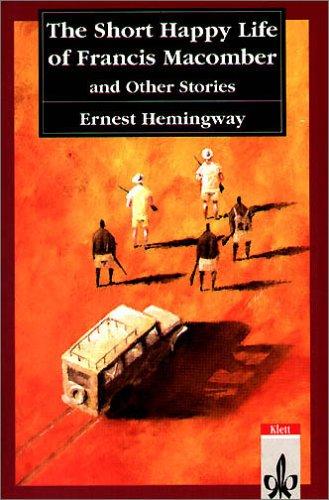
Francis Macomber


Although the story takes places over a brief period; the last two days of the main character’s life, he put the meaning in his life in that period. That is why the title is “The Short, Happy Life of Francis Macomber”.

The marriage between Francis and Margot is not one of faithfulness and love but one filled with distrust and worry. Details and clues show us that there are mainly two problems in their marriage; her betrayal and his lack of self-confidence. His lack of self-confidence gave her all the courage in their relationship and is a major contributing factor in her betrayal. Their relationship is selfish ; he wants her beauty while Margot desires his wealth. Hemingway gives the reader the impression that Francis is not necessarily an attractive man nor is he good with the ladies, but he is definitely rich. Margot, on the other hand, has one great advantage, her beauty. Therefore, Margot was too beautiful to be divorced and Francis was too rich to be left. This situation left not much choice to Margot. That’s why she was so keen on hunting expedition in Africa where danger waits every newcomer. An accident or a chance to kill her husband was very likely to happen. All she desired was a manly husband with money. Francis was all aware of her feelings that the next time to prove his masculinity,instead of running from danger, he would pursue it. The buffalo hunt gives him a newfound of happiness and wealth. She takes it as a threat. Consequently, unfortunately for Francis, the moment he gets ready to make the last shot to kill the buffalo, Margot raises her own gun and kills him! She didn’t hesitate to shoot him because she was afraid that he would run away like he did before or he would be victorious and become even bolder so that with his newlygained confidence, he would leave her. Actually by killing him instead of killing the animal, she did him a favor, otherwise it would increase his shame!

Finally, Margot’s final action is critical and hard to determine any simple explanation but there’s one thing clear: Francis’s death was not a tradegy at all, but a victory because he died in the act of affirming himself.

Hidrofil Pamuk


High-Heels


The advertisement that I have chosen is a recent advert for MarcJacops’ reverse! heels. The reason why I chose that shoes and that particular advert is that Victoria Beckham is starring which makes the simple picture a meeting place where the most stupid shoes embrace the most absurd figures of TV, the Posh. All we see of Victoria Beckham is her legs spread-eagled and popping out of a huge MarcJacops’ shopping bag: women are either tough superbitch or infantilized victim.

The female as innately shoe fetishist has become a stereotype of advertising, magazines and look-books. And the designer shoe not only has stereotyped women in this way but also has become the symbol of female power and liberation due to post feminism’s “impressive” endeavor. It is ironic in the sense that high heels presented a view of womanhood as decorative, constricted, hypersexualized and enslaved by fashion. There are many reasons lead to creation of this image but among the very popular is the TV shows or movies (mass media) such as Sex and the City, one of its episodes was actually named “A Woman’s Right to Shoes” and Confessions of a Shopaholic. Contemporary shoe advertising is highly sexualized with images of women in positions of both extreme submission and dominance. A Chanel advert presents women in high heels who take men on walks on leashes or in the sensational Dolce Gabanna ad women in high heels are featured as victims of gang rape. Though it must be the shoes which must be the most important part of the advertisement, they are clearly looked-over by the half-naked women images. The purpose of this half-naked body is to get the attention of the trendy magazine reader. Unfortunately, this “Barbie” look is still considered or shown to be the only way or the ideal for women and it also suggests that women have to use their bodies to sell something!

Hidrofil Pamuk


Yalın Bir Bakış

Feminist yaklaşımın duyarlılığını çoğu zaman histerik; aşırı derecede abartılı bulmama rağmen, Yalın’ın birkaç şarkısı kulaklarımı tırmaladı. Önceki albümlerinde “Bir Bakmışsın” şarkısını dinleyince “ne kadar da bencil ayrıca kıza nasıl olur da hiç öyle sağlam da değilsin der?!” gibi tepkiler vermiştik. Bunun üstüne 2009 yılında çıkardığı “Ben Bugün” isimli albümden “Başka Hayatların Kadını” şarkısını dinlerken ritim tutan parmaklarım birden direksiyona yapışık kaldı tabi yüzümü de bir karartı aldı. Hemen şarkıyı geri sardım ve tekrar dinledim. Evet, yanlış duymuyordum Yalın “Eksik aklıyla her oyun onun oyunu…” diyordu. Sonra diğer şarkılarına da kulak kesildim lakin bir albüme bir gaf yetiyor sanırım. Eve gidince diğer şarkı sözlerine baktım ve genel olarak bakılınca romantik prens havası estirse de her aşkla yüz göz olanın yaşadığı ikilemlerin sonucu olarak incinmiş gururun ve egoların sayıklamaları gibi gelse de kulağa şarkıları öyle değil. Hep alt katmanda işlenen erkek olmanın sağladığı avantajlar ve kadınları sürekli kötü, umutsuz ev kadınları ya da tüller içerisinde, nazlı, pembe seven feminen tipler olarak dayatan teması göz kırpıyordu. Şarkıları dikkatlice dinlenildiğinde güçlü bir maskülen söylemi olduğuna kanaat getirdim.

Beni bu kadar şaşırtan asıl nokta bu sözlerin Yalın tarafından söyleniyor olmasıydı. St. Michel Fransız Lisesi’nden mezun, İngiltere’de ve Özel Bilgi Üniv.’de eğitim alan Nişantaşı-Cihangir tayfasına ait yani kısacası mürekkep yalamış, “cool” ve çağdaş bir genç adamdan bahsediyoruz. Elimizdeki Yalın imajının boşluklarını Evrim Sümer’in geçen ay Vogue’da yayınlanan “Bir çocuk yaptım…” başlıklı yazısıyla doldurdum. NTV’nin jön spikerlerinden Mirgün Cabas’ın da -ki çok sevdiğim Cihangir sakinlerinden olan Teoman’ın yakın çevresinden de sayılabilir- hiç farklı olmadığını gözler önüne serdi “bir çocuk yapmak”. Ama insan ne kadar sinirli ya da okumamış bile olsa bir kadına eksik akılıyla dememeli dese bile bunu yazıp sonsuza yollamamalı.

Bana göre feministlerin asıl üstünde durmaları gereken konu /’larla belirtilmiş kişi zamirleri olmamalı. Son dersimizde de bahsettiğimiz gibi “so what?!”-lık durumlar söylemlerle örülmüş tehditleri gizlediğine inanıyorum.

Aşağıya Yalın’ın ben de bu izlenimi oluşturmasını sağlayan şarkı sözlerini sıraladım:

Bir Bakmışsın

Eski fotoğraflar
Mutlu gülen iki yüz
Merdivende sarılmışız hiç bırakmayacak gibi
Adım adım eksildik
Nedenini ben anlamadım Sormaya korkar oldum
Yıllandık diye mi yıprandık
Yaşlandık diye mi paslandık

Güvenme bu kadar aşkıma
Hiç öyle sağlamda değilsin
Titrerim kendi üstüme
Benden değerli değilsin

Bi bakmışsın ben yokmuşum
Üzülmeye doymuşum
İsyanımı yola koyup
Hayatından kaybolmuşum

Başka Hayatların Kadını

Baska hayatlarin kadini
Ben seni hic bir seye inandiramamisim
Razi olmusum da karsi durmusum kendime
Ah bir icim su,selvi de boylu
Eksik akliyla her oyun onun oyunu
Toparlanmazmisin
sen akillanmazmisin
dereden gecen suyun ne haddi ne hesabi
biz bize dusman bizbize yabanci
uyanmazmisin simdi uyanmazmisin
Ask biraz kendine yalan soylemek gibi
hani gocmen kus gibi
heryere yakisip hicbirinde kalamamak gibi
yani sen gibi


Ama Kaybettin

Söz söylenecek bir söz kaldı bende

Sen bıraktın beni neden böyle

Yslan yanlış hayatında

Doğruyu buldun biran biran böyle

Kaybettin


Ama kaybettin suç sende

Seni çok sevdim hata bende

Kalbinle söyledin sende

Beni sevdiğini böyle


Zamanında anlasaydın beni zamanında

Çelişkide kalırmıydım biran olsa

Artık anlasanda anlamasanda

Senin hatan benden bi fazla

Kaybettin


Aşk Ne Demek

Seviyorum seviyorum da senden hiç haber yok
Yanıyor ağlıyorum da senden çıt yok
Eriyorum görüyorsun ama sıcaklığından eser yok
Hemen hemen bitiyoruz ama senden hiç adım yok

Aşk ne demek aşktan yanmak ne demek
Kenarından bile geçmiyorsun
Öğretemedim sana,senden öğrendim
Savaşmak ne demek

Bir anım olsa o an ahım tutsa
Yine istemem incinme sen
Bir hayal kursam içine seni koysam
Hiç gitmesen....


Sakın Arama

ben sana asırlardan gün yaptım ama saymadım
sen bize ne oyunlar ettiysen ben uyumadım
duy diye şarkılar söyledim yine de duymadın
ben hancıyım
bunla kurtulduğuma duacıyım
sen yolcusun adı sütünde unutulur yokluğun

sakın arama sorma yine deneme
bundan böyle selam bile verme
iki gün olur üç gün olur elbet taş yerini bulur
SAKIN ARAMA


Uzaktan Dünyalı

Yok diyorken hal bu halken
Bir yerinden şu limandan
Çıkıp rüzgara karışıp yeniden yanılmaya
Korkuyorken

Sen bi farklı uzaktan dünyalı
Çok hevesli çok heyecanlıydın
İnandım tabii durmam elbet
Bildik umutla denerim evet

Kızdır nazdır aşkın hep azdır az daha getir
Kalbini götür

Guru yerine Seni seçtim
Huzur kalmasın gürültü isterim
Çınlasın evin sesi çıksın
Her yanına hayat bulaşsın


Zalim

Ellerine sağlık, hadi durma kutla bu zafer senin
Yüreğine sağlık, yalan dünyanda tek safirin
Onu kaybetme, onu kirletme, hırsınla süsleme

Ellerine sağlık, hadi durma kutla bu zafer senin
Yüreğine sağlık, yalan dünyanda tek safirin
Onu kaybetme, onu kirletme, hırsınla süsleme

Hadi seni sevdim diyelim bir daha,
Gözümü karartıp yeniden taptığımda
Değişecek misin söyle, değişebilecek misin zalim?

Zalim oyun bozan, sen de bu büyü de yalan gelip de bir tanem olmaya ne hakkın var?
Zalim oyun bozan, sen de bu büyü de yalan gelip de bu canda hükmetmeye ne hakkın var?
Gelip de birtanem olmaya ne hakkın var?

Ellerine sağlık, hadi durma kutla bu zafer senin
Yüreğine sağlık, yalan dünyanda tek safirin
Onu kaybetme, onu kirletme, hırsınla süsleme

Hadi seni sevdim diyelim bir daha
Gözümü karartıp yeniden taptığımda
Değişecek misin söyle, değişebilecek misin zalim?

Zalim oyun bozan, sen de bu büyü de yalan gelip de bir tanem olmaya ne hakkın var?
Zalim oyun bozan, sen de bu büyü de yalan gelip de bu canda hükmetmeye ne hakkın var?


Hidrofil Pamuk